Preserving a Piece of Rolling Hills Estates History
The Story Behind Our Entrance Sign Restoration – by Martha Pettengill, September 2026
Sometimes, we walk past something hundreds of times without realizing just how special it is.
That was certainly the case with our Rolling Hills Estates entrance sign.
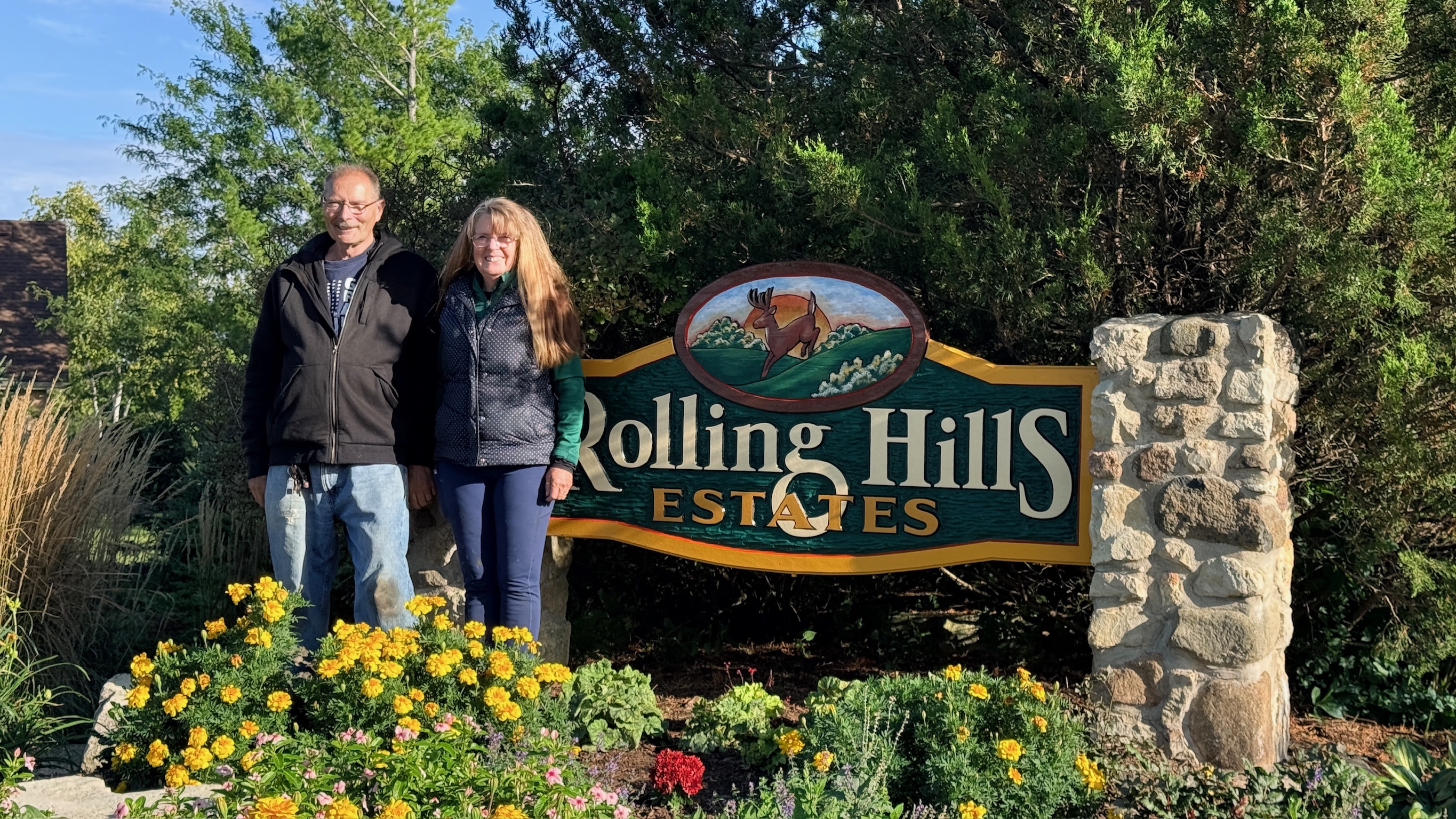
Earlier this year, while Sandra and I were working in the entrance flower bed, I took a closer look at our aging sign and noticed something remarkable. What I had always assumed was simply a painted wooden sign appeared to be entirely hand-carved—even the lettering! I was astonished. Once I realized what we have, and how badly the sign was deteriorating, I couldn't stop thinking about it. I became determined to learn its history and find out whether it should be and could be saved.
Uncovering the Sign's History
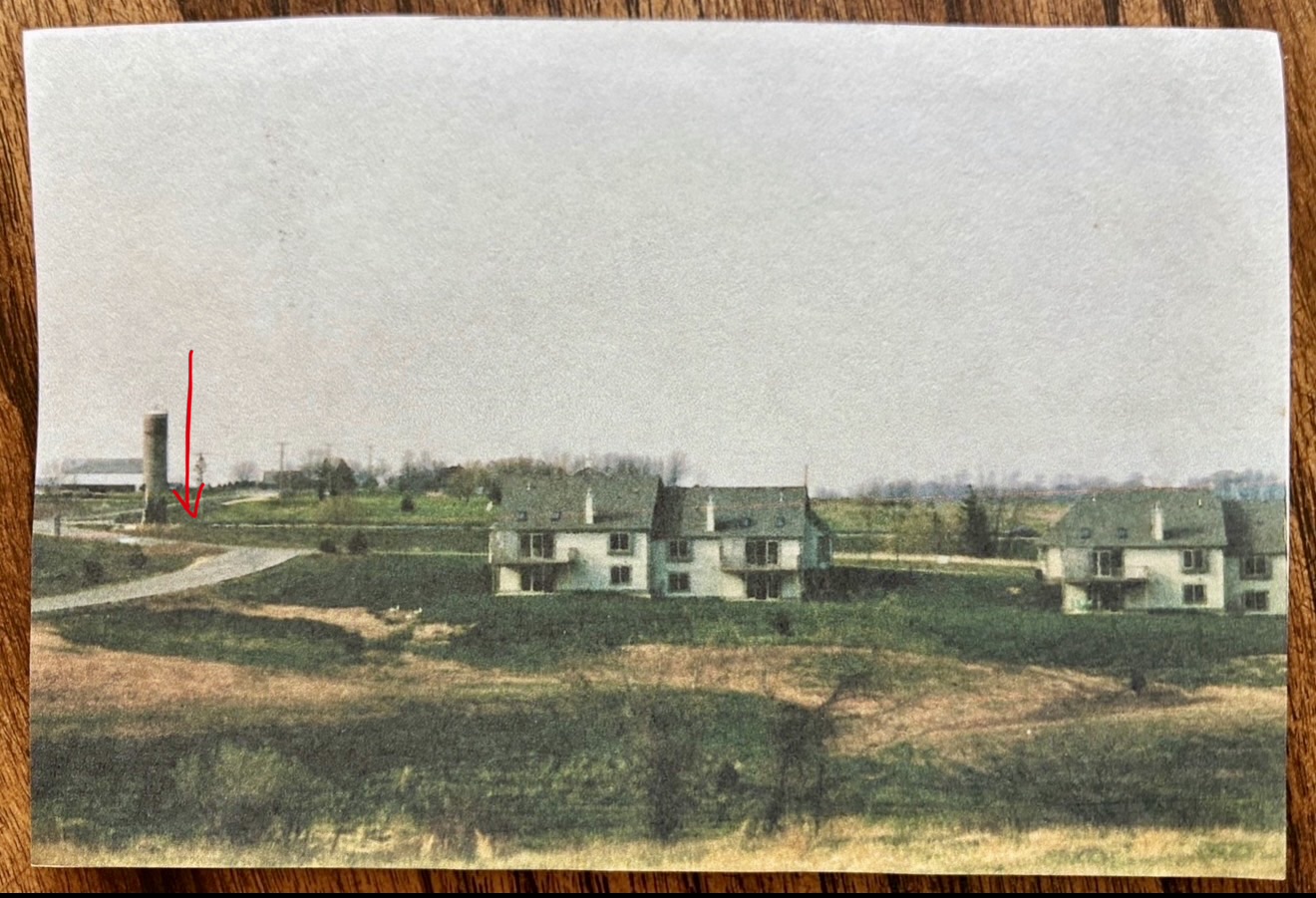
My search began with Town Chairman Michael (Mike) Didier, whose late father, Peter Didier, was the original developer of Rolling Hills Estates. Mike kindly helped me locate Carl Rauwerdink, the now-retired craftsman who created our sign more than 25 years ago.
Carl confirmed something extraordinary: the entire sign was hand-carved from ONE solid slab of Redwood, including every letter, the textured background and the decorative artwork. It was a substantial piece of craftsmanship, created specifically for our community.
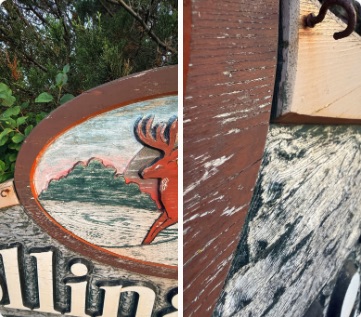
After reviewing photographs, Carl expressed concern about the sign's deteriorating condition. He explained that the protective finish should ideally have been renewed every 7–10 years. After more than 25 years of exposure to Wisconsin's weather, the wood was showing significant deterioration, particularly on the back.
His recommendation was clear: restore and protect the sign before another winter, or risk further damage that could eventually make replacement necessary. And replacing a custom, hand-carved redwood sign of this size and quality would likely be considerably more expensive than preserving the original.
A Remarkable Connection to the Past
Fortunately, Carl had another surprise for us. He referred me to Sandy Hauman of New Holstein, who had worked in his sign shop years ago.
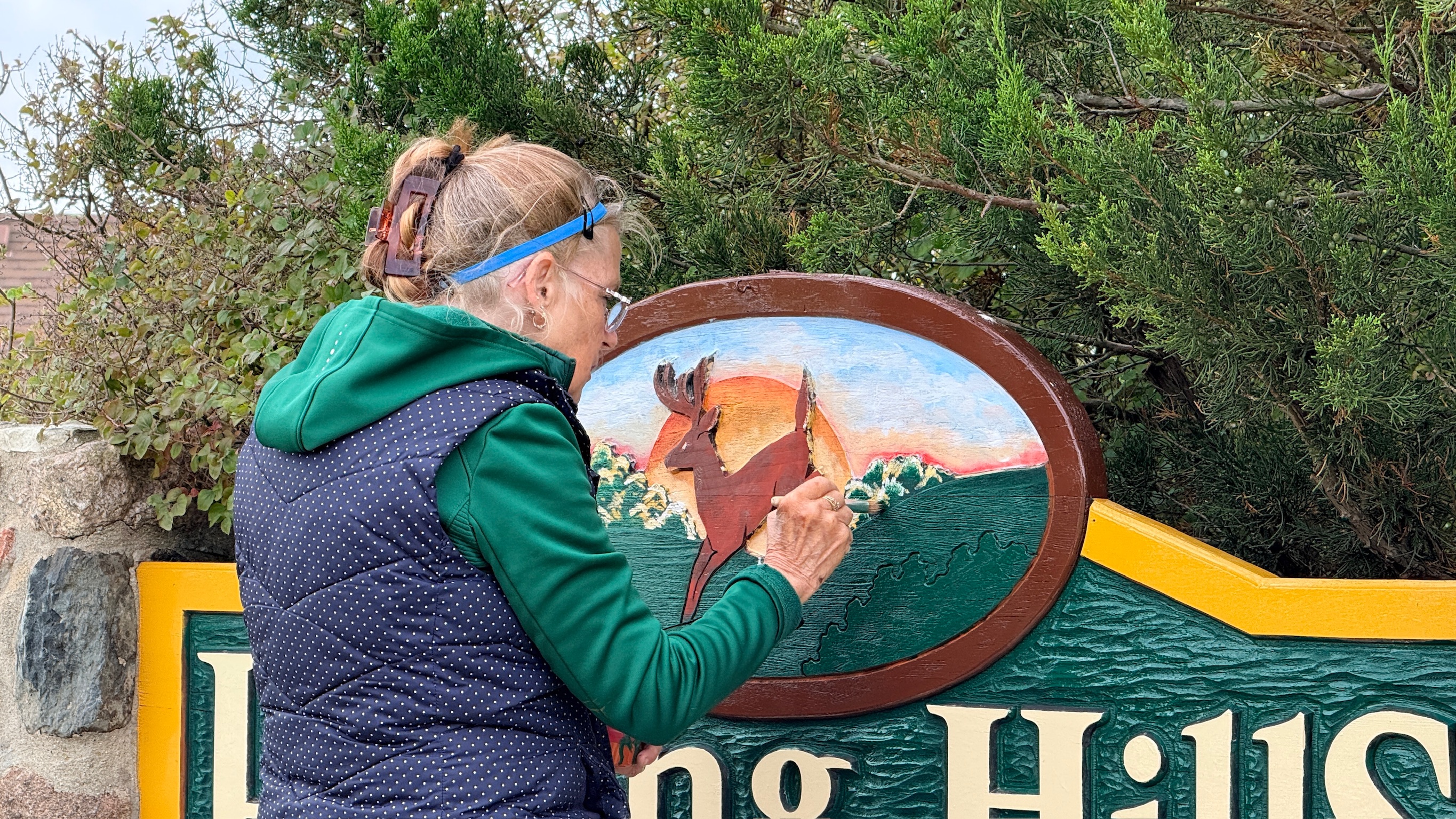
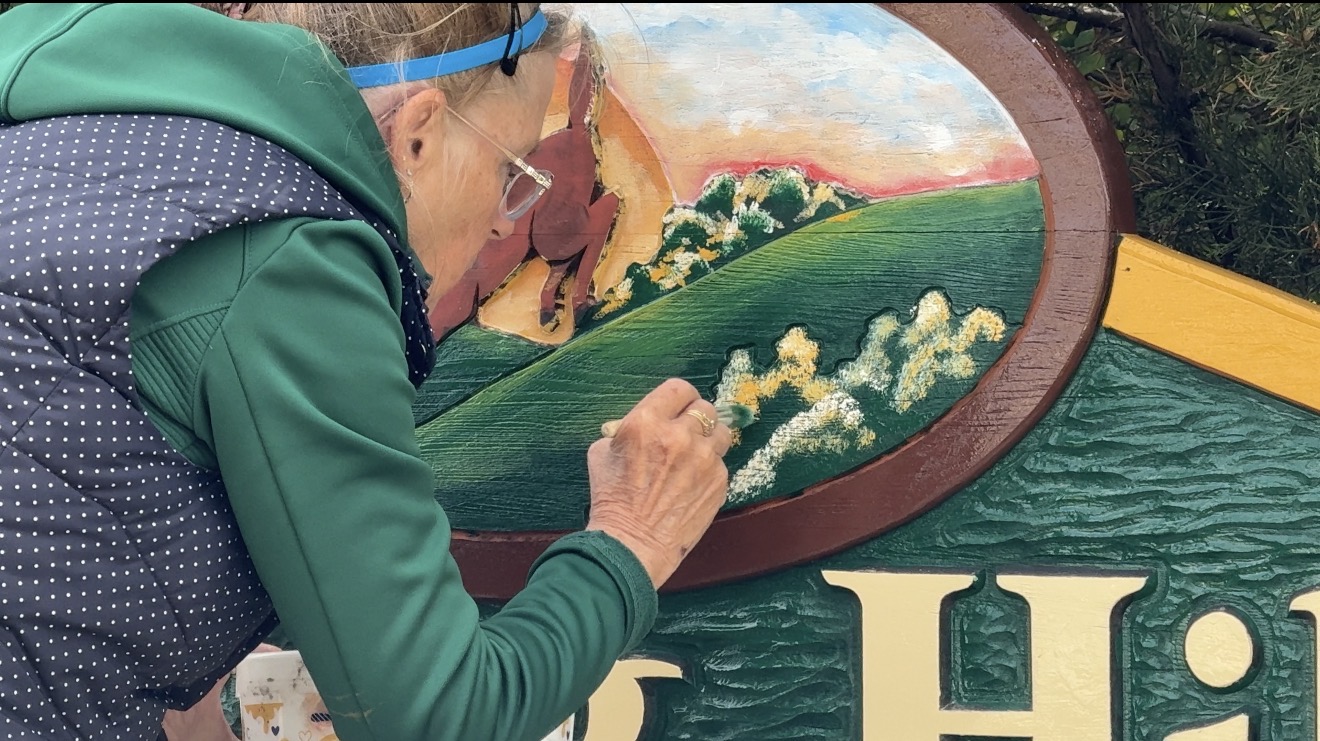
As it turned out, Sandy wasn't just familiar with Carl's work—she was the artist who originally painted OUR sign when it was first created!
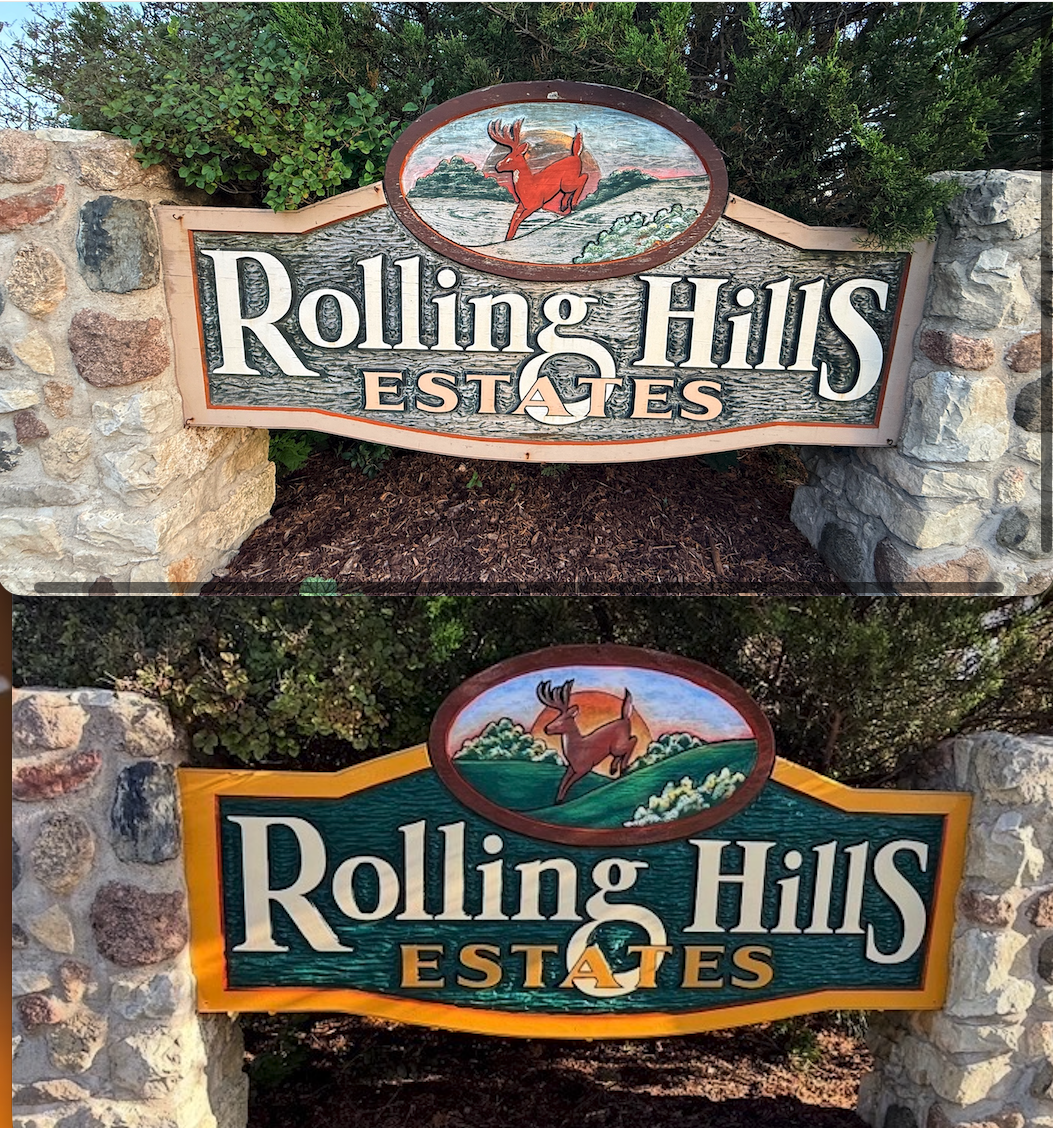
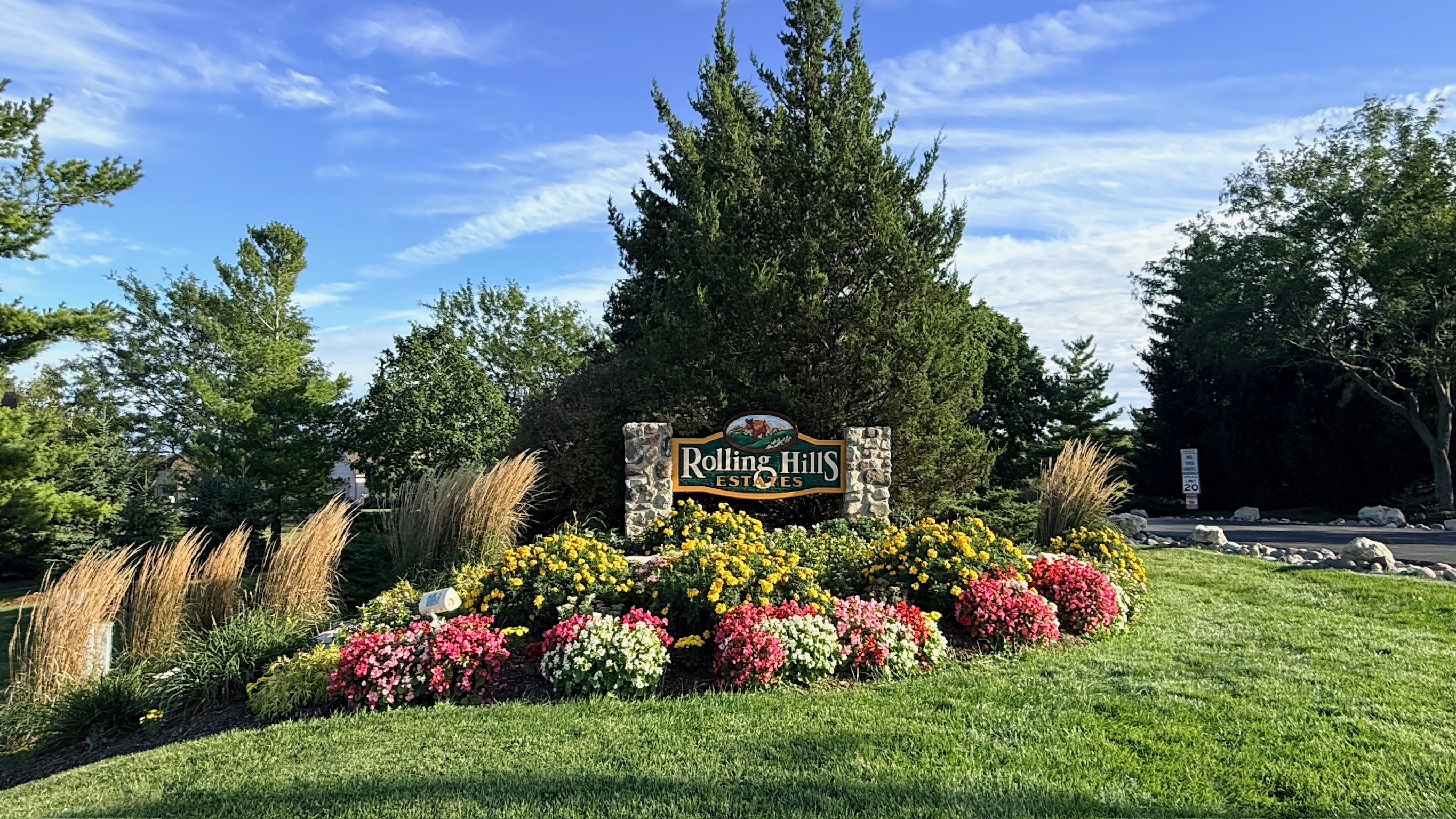
Now retired from her work as an art and music teacher, Sandy and her husband, Gordon, still occasionally restore and repair signs originally produced in Carl's shop. After visiting Rolling Hills and inspecting the sign, they graciously agreed to take on its restoration. Over three separate days in September, Sandy and Gordon traveled from New Holstein to carefully restore this piece of our community's history. The aged redwood was extremely dry and absorbed considerable amounts of paint, requiring multiple applications. Sandy painstakingly restored the original colors, lettering, borders and the beautiful deer-and-landscape medallion. Meanwhile, Gordon attended to the badly weathered back of the sign, treating the wood with oil and then painting the entire back to provide additional protection.
They used traditional professional sign-painting materials, including the lead-based enamel formulation associated with the original sign, chosen for its durability. They also provided a protective maintenance product and instructions for its application each spring and fall to help preserve their work.
A Personal and Unexpected Privilege
One of the most memorable moments for me came when Sandy, who is also an art teacher, invited me to pick up a paintbrush and help paint a portion of the sky and sunset behind the deer. I was reluctant, to say the least! After all, we were trying to preserve a beautiful piece of craftsmanship, not experiment on it! But Sandy encouraged me, and I felt genuinely honored to contribute a few brushstrokes to the restoration of something so special.
More Than Just an Entrance Sign
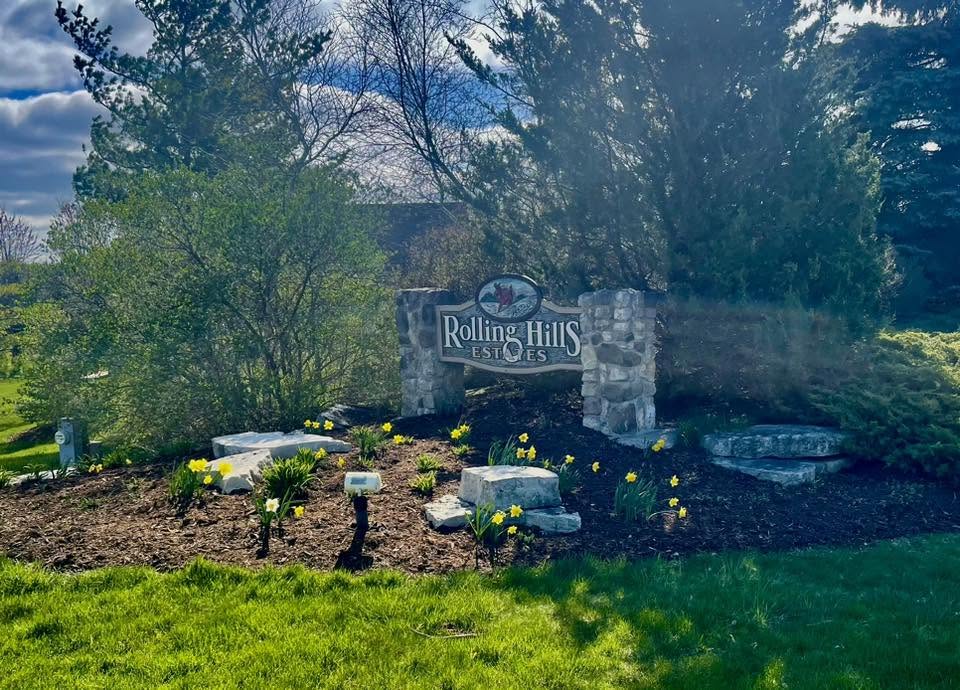
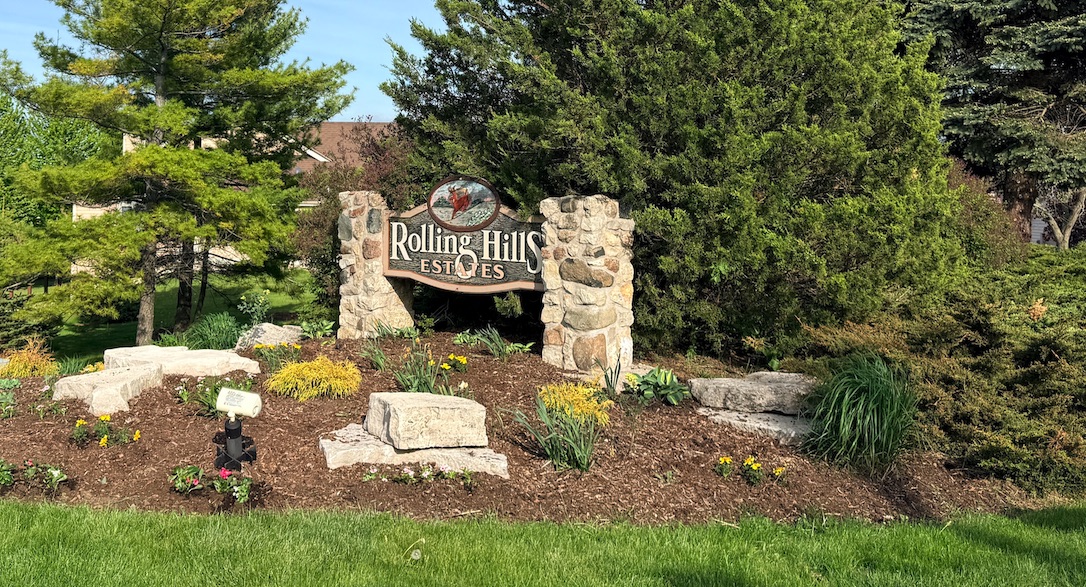
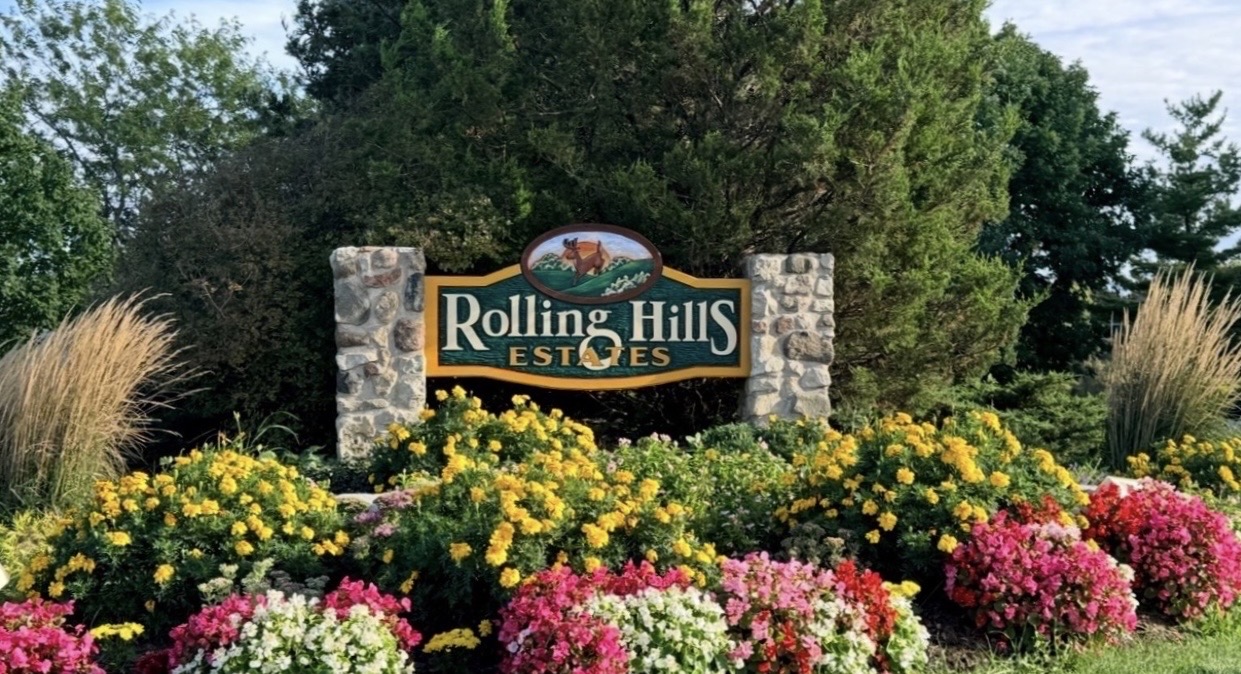
Our entrance sign is more than a marker identifying Rolling Hills Estates. It is an original piece of our community's history, created by skilled artisans more than a quarter-century ago. It is also a focal point of our entrance landscaping and one of the first impressions visitors and prospective buyers have of our neighborhood. Preserving it protects not only a unique piece of craftsmanship but also the beauty, character and curb appeal of our entire community.
The timely investment in restoring this sign was an investment in preserving something that would be difficult and costly to replace.
We owe a debt of gratitude to Carl for his original craftsmanship and invaluable guidance, to Mike Didier for helping us uncover its history, and especially to Sandy and Gordon Hauman for bringing this beautiful sign back to life. How fortunate we are that the original sign survived all these years—and that we were able to reunite it with the very artist who first painted it!
With the proper care and maintenance it will now receive, there is every reason to hope this remarkable piece of redwood craftsmanship will outlive all of us, continuing to welcome residents and visitors to Rolling Hills Estates for generations to come.
We hope you'll enjoy the before-and-after photographs and share in appreciation for this beautiful piece of Rolling Hills Estates history.